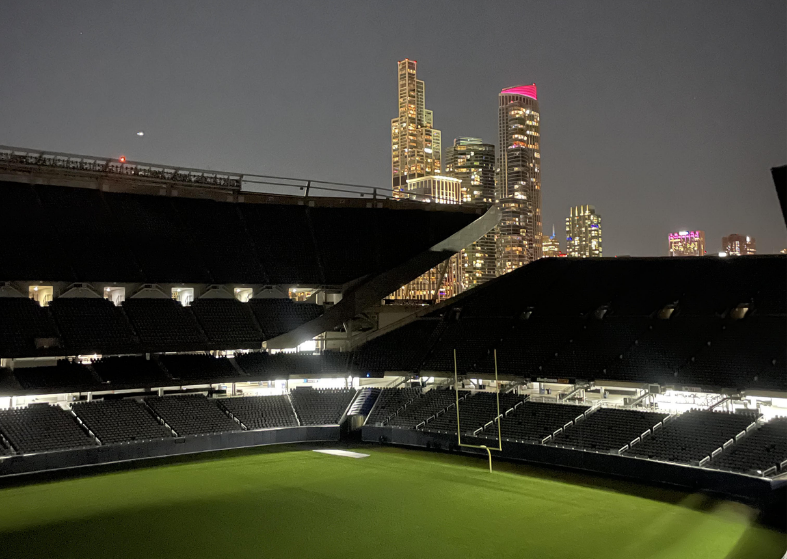
The flash of cameras during photos, laughs when getting ready with friends and energy in the Jones gym are all things students enjoy about Homecoming. The news of changing the venue to Soldier Field was a shock and not taken very well by many students. The increased ticket prices and unfamiliarity have raised many questions, the main one being “why?”
Students have voiced their opinions of being upset by this sudden change, such as expensive ticket costs and a lack of planning, communication and profitability. Principal Kerry Dolan decided what Homecoming will look like this year, even though planning such events is the Student Government Association’s given responsibility. This situation reveals an ongoing theme of miscommunication and poor planning by the administration.
“We’re not able to have enough capacity for every student who wants to buy a ticket to be able to attend,” said Dolan at the Local School Council meeting, Sept. 30. “Ultimately it was in our hands to take action to do something to address the capacity limits. The only thing we could really do was move.” Dolan’s main argument for having Homecoming at Soldier Field is that the increased capacity would accommodate more students to attend, as approximately 50-100 students each year have been declined the opportunity to attend Homecoming in the gym, according to an email sent out.
The maximum capacity of the Jones gym is 1,500, according to SGA President Tessa Peck-Walden, a senior. Possibilities of opening up other areas in the school, like cafeterias or the auditorium, could be explored so that the capacity can be increased from 1,500. The venue change has caused an increase in ticket price, from $20 in the gym to $60 at Soldier Field, making the dance more exclusive, when the main reason for having it off campus was to allow for larger attendance.
But capacity is not the only issue of having Homecoming at Jones.
Other security and logistical issues arise with the venue being in the gym. The temperature inside the gym gets very hot when everyone is packed in and dancing, dehydrating students and volunteers, as well as being difficult to supervise. The space getting hot is inevitable, as students will be dancing and dehydrated at any venue. The supervision issue can be addressed with more parent volunteers or blocking off certain spaces students aren’t allowed to enter. If Homecoming has been at the same venue for years, why are these issues only being addressed now?
Students like Genesis Pikula, a sophomore, are not attending the dance this year because they don’t think paying $60 is worth it. The form to request ticket assistance was sent out, funded by parent donations, but it was not marketed or made clearly available. “I didn’t even know that existed…. I only saw that because of a friend,” Pikula said. If Pikula had been aware of this form, she would have had the opportunity to decide whether or not she wanted to attend Homecoming this year.
The form was originally open for only three days but was extended at the LSC meeting Sept. 30. Only 92 out of 700 to 800 qualifying students filled out the form, so other students could have been unaware that it was available to them, just like Pikula. Some students could in theory be able to afford the pricey ticket, but realistically can’t dispose of $60 for something unnecessary, which goes directly against Dolan’s expressed goal to increase student attendance.
Along with pricing for students and accessibility, the inability to produce profits from hosting Homecoming off campus is also a huge problem. Having Homecoming at Jones usually costs between $6,000 to $7,000, but having it at Soldier Field could cost up to $140,000, according to Peck-Walden. We have received funding from Friends of Jones, the LSC and outside funds, but at what cost? Jones has faced losses because of budget cuts, so planning an expensive dance makes us look irresponsible and ignorant to academic losses.
It seems as though students and SGA members are addressing the obvious flaws while administrators are trying to pull off an impressive and extravagant event without considering the substantial holes in planning and overall execution. According to Peck-Walden, the ability to generate profits “is unlikely” and “we will barely break even if we do.” At the LSC meeting on Sept. 30, Dolan confirmed that SGA should walk away with between $12,000 to $16,000 when their usual profits from having it at Jones is around $18,000, leaving less money for future student events.
The main problem present in this situation is administration failing to include SGA in the planning process. “We were informed that Homecoming was being negotiated to be off campus after we had already planned for it to be here… that information was found out by coincidence rather than a setup meeting,” Peck-Walden said. It is very important for the student body to be represented in an event that is set up for them; if students’ suggestions aren’t considered, they won’t want to attend.
Planning student events like Homecoming is SGA’s job, and administration taking over this student-led process without formally informing members is unacceptable. Much of this venue change process started over the summer, the same time that SGA began to plan Homecoming at Jones, so administration must have recognized that planning it at that time and not telling SGA of their decision would take away the opportunity, and the student body they represent, to be involved in the decision-making process.
Off-campus Homecoming is an exciting and memorable experience for students, and many appreciate the dedication from administration to making this event special. However, the timing with many budget cuts has proven to not be ideal, especially compared to the money both Jones administrators and students are spending on a dance. Going forward, administration can improve on including SGA and student voices so that similar miscommunications and planning issues can be avoided.