The American dream has been a concept since the birth of the country itself, with benefits such as personal freedom, prosperity, education and safety all hypothetical concepts that have been perpetuated for decades as drawing factors for why people relocate to the United States. However, as of the last near year and a half, the United States has resembled a nationalist state of control, vastly different from the romanticized image of “the land of the free”. Domestic actions such as the unconstitutional deployment of federal law enforcement and military actions against the public, unjustified killings and deportations of civilians by immigrations officers, and the “America first” style of foreign policy that has led to unwarranted attacks and military intervention in foreign countries (Iran, Venezuela, and Cuba, as of the last few months) have proven one thing; the exemplification of direct descent into fascism, according to scholars such as UC Berkeley’s Edward Lempinen.
This topic as a whole has been investigated at length; however, a key demographic has been left out by the media since the very beginning— the youth personally affected by these actions. How do Chicago teenagers view the state, or lack, of the American dream through this lens?
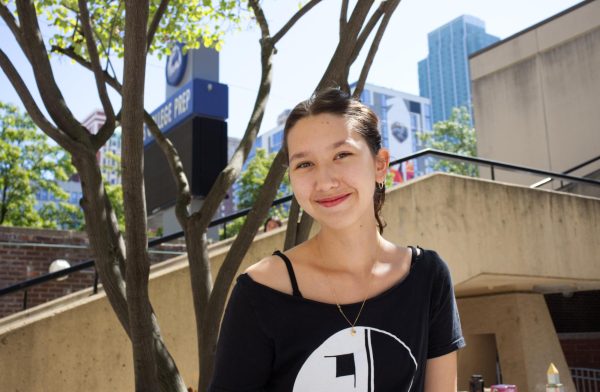
“Everyone recognizes that by moving to America, you get more opportunities,” Lana Zoraja, first-generation Serbian senior at Walter Payton College Prep, said. “But they don’t like the fact that America’s encroaching their own lifestyle on other countries.”
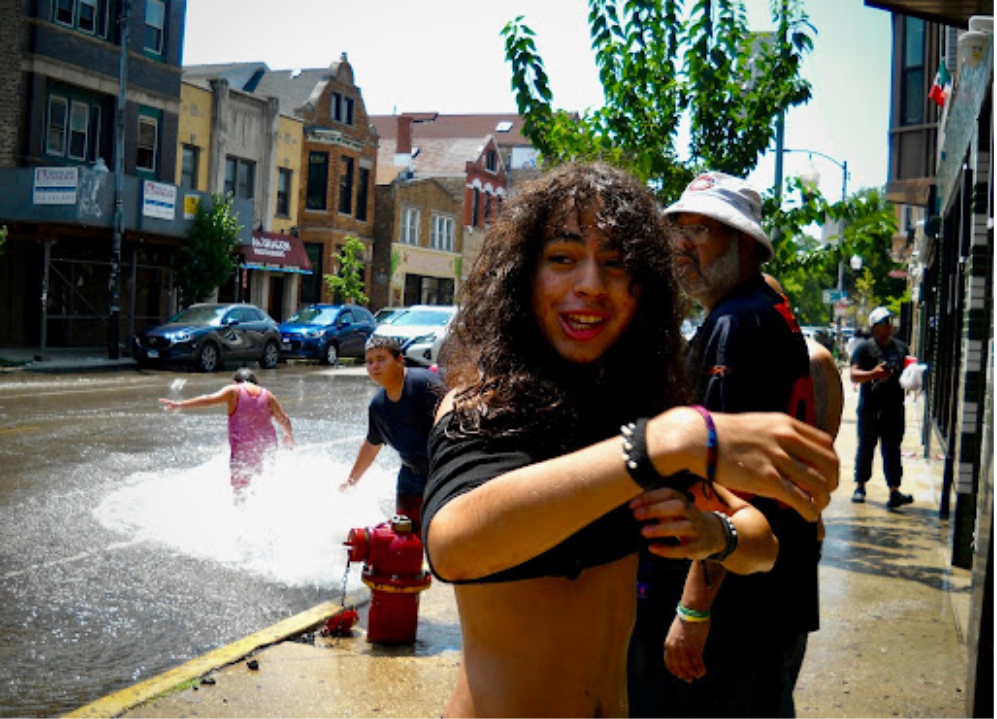
Cassian Amador, a junior at Oak Park and River Forest High School, spent the first six years of their life in Honduras and holds incredibly similar thoughts in terms of the general outside perspective on American political affairs.
“It’s looking in and being like, yeah, that’s awful, but they have clean drinking water and access to health care. And over here, it’s like, bad and awful, but that’s how it’s always been,” Amador said. “So over there (America), there’s more opportunities, but it’s the same quality of life.”
The rise of corruption and drop in quality of life is a key sentiment that was raised multiple times throughout the course of conversation. For many students whose parents immigrated to the United States to escape political strife and corruption, recent government actions have felt almost like a never-ending cycle of betrayal, especially in terms of unwarranted foreign intervention.
“10 times out of 10, it doesn’t work, and seeing the domino effects of interventions, especially in Latin America from the 1960s, it’s still affecting people. All of our major banks and companies are European,” Amador said. “We have no big exports or imports that are controlled solely by us. Interventions never work. And to put it like super under-complicated, everybody that’s coming here, who migrates here, who are refugees here, is because we (US/EU countries) are over there.”
Furthermore, the complexity for students navigating the effects of the United States’ actions is exacerbated by the deep peer-based divides that come from a lack of understanding.
“I think the biggest thing that a lot of people who I talk to who don’t have an immigrant background miss is that they think that they’re taking a kind of high ground by having a more centrist opinion,” Zoraja said. “You’ll bring up any sort of conflict and they’ll be like, ‘well, it’s complicated, you could see both sides’. People are more hesitant to say that the US should get out of conflicts, because they still believe that the US is some kind of world power that can help out.”
Going beyond a simple conflict of opinion, countless Chicago students deal with the intense implications of the crackdown by the Trump administration on immigration in a way that affects daily life, with normal days turning into deeply stressful gauntlets.
“Everybody I go to school with is rich and white and out of touch and they have never known struggle. They’re out of touch with the events on the ground and the people it affects,” Amador said. “I can’t go outside anymore without feeling baseline anxiety. And because of the various American funded cartels and gangs, it makes it dangerous if I get deported.”
Clara Parker ‘27, a Canadian-born Jones College Prep student, describes similar emotional tolls on her and her family that the Trump administration’s recent actions have induced.
“This whole administration has freaked my parents out enough that they’re applying for US citizenship. I’m getting my passport renewed, so it is terrifying to know that I do not physically have it with me for the next couple weeks because I had to get it sent off. And just even more anxiety in airports,” Parker said.
The voices of these three Chicago students are simply a few out of countless teenagers in the city who share the same experience of trying to learn, grow, and simply exist through a time in which the safety of themselves and their families is called into question daily.
“When they say immigrants, they’re looking at us. At our families. It just seems to hit a lot closer to home. It’s not just a vague thing about whatever Trump is talking about nowadays,” Parker said.