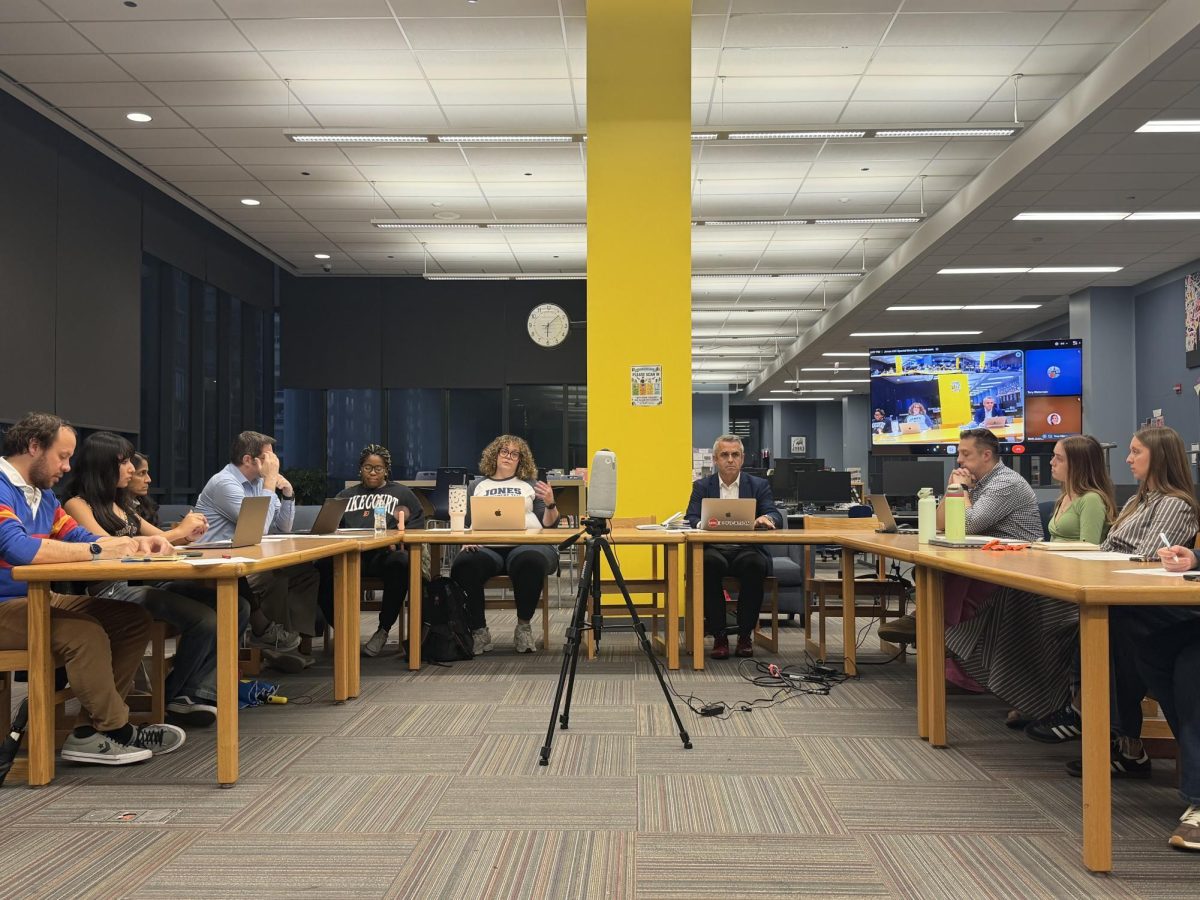

Stepping into the room is a prepared student, looking upon a panel of teachers that have seen them at both their highs and their lows, with notecards in hand and plenty of rehearsals done the days before. As they go to the front of the room, a projector flickers their slides onto the screen as the student gets ready to deliver a presentation they have spent the entire school year working on.
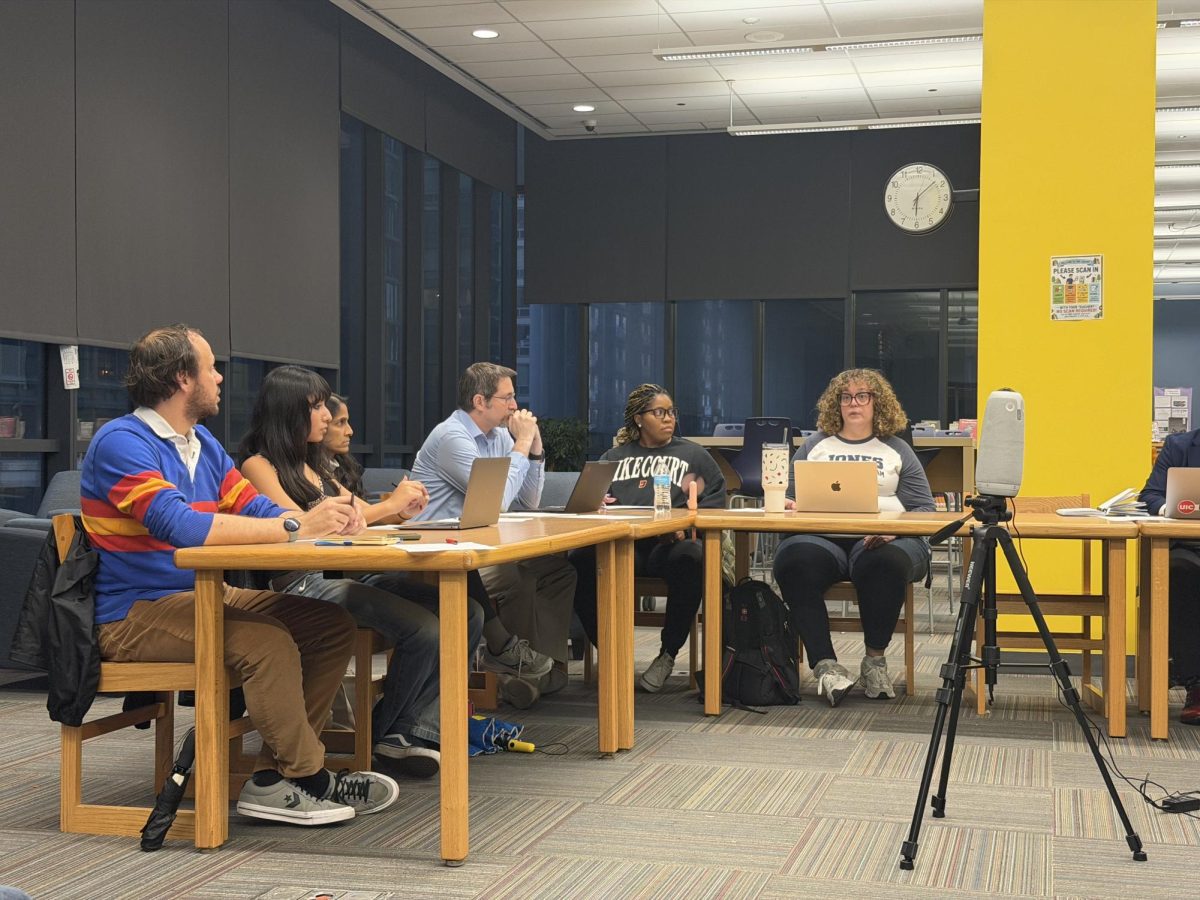
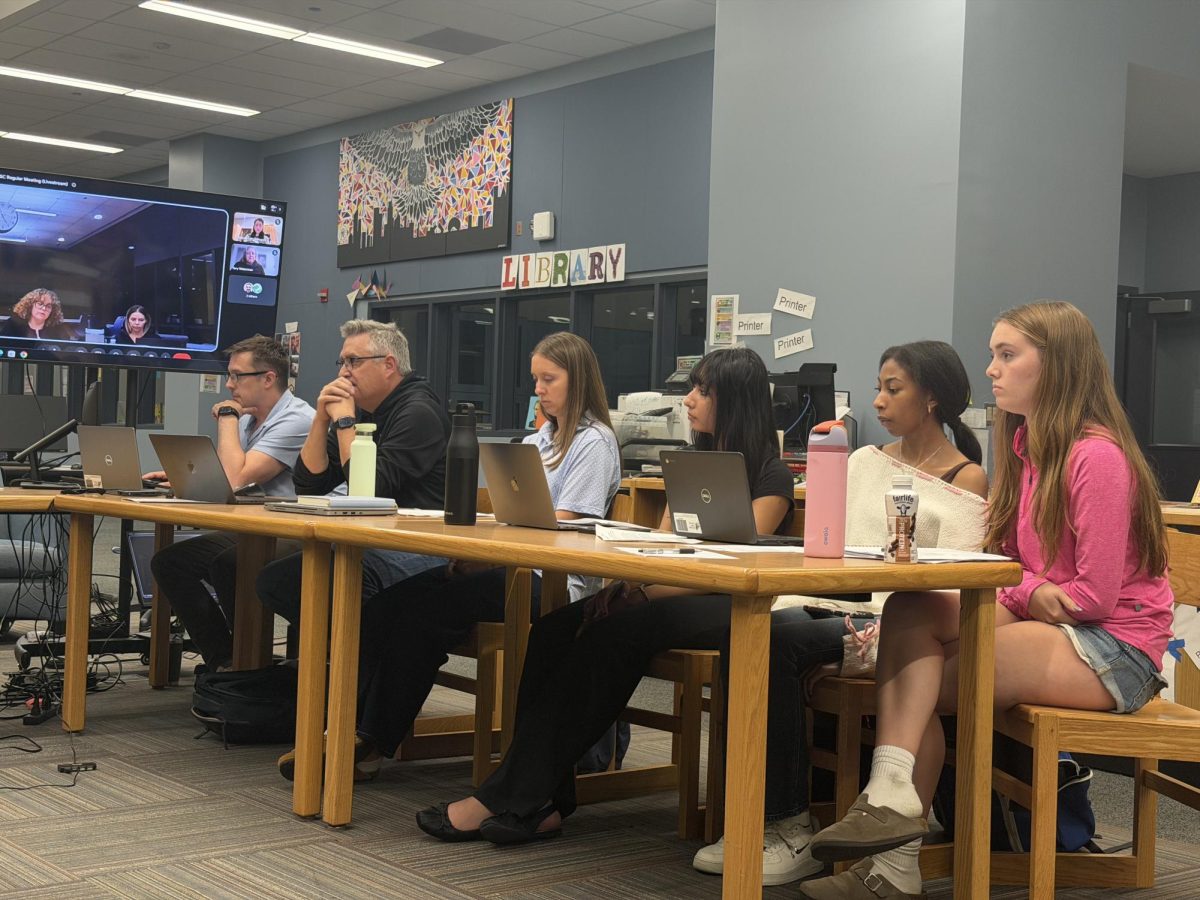
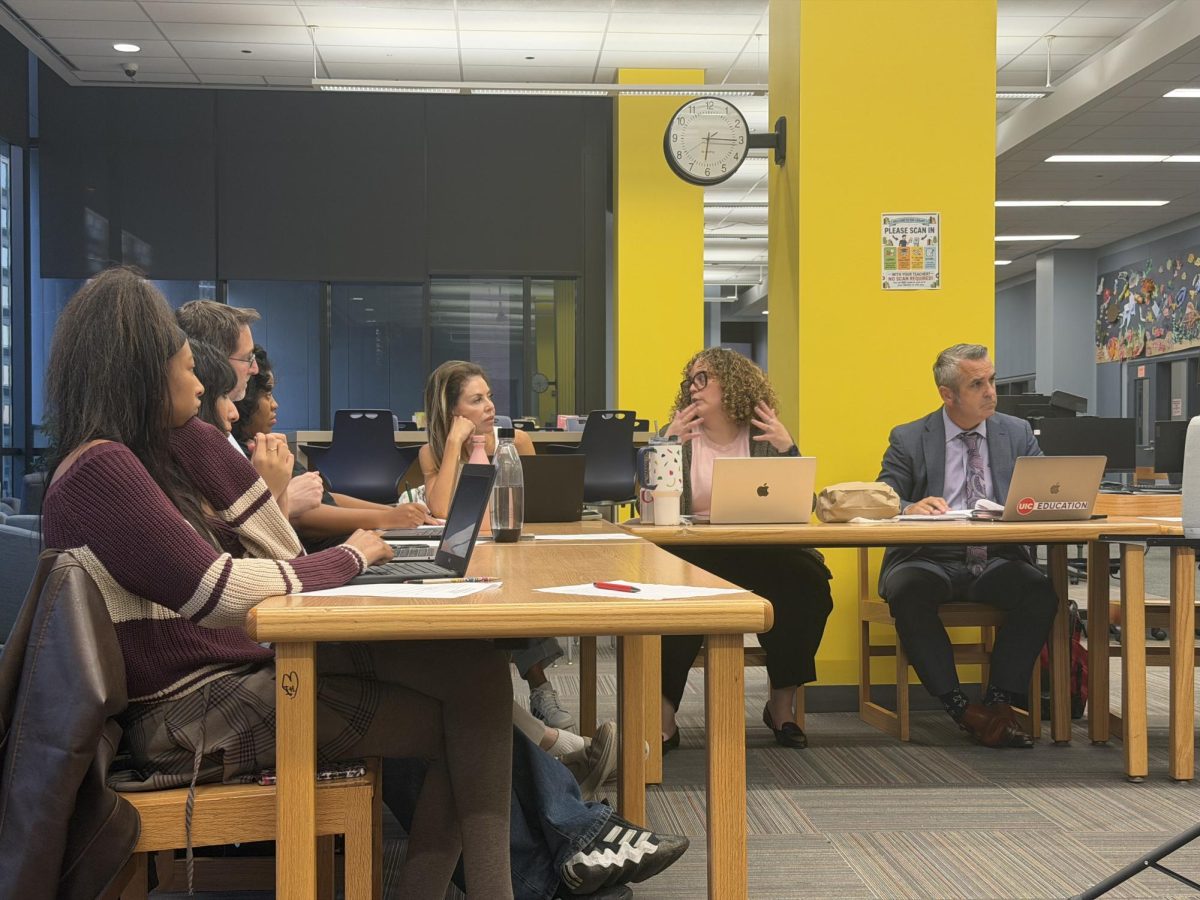
Throughout the month of April, students from AP Research presented their year-long projects to a board of teachers that included AP Research teachers Caitlin Miller and Brady Gunnink, and a teacher of the student’s choosing. AP Research is the second class taken as part of the two-year AP Capstone program. Students learn to analyze sources and present their findings in AP Seminar, which lays down the framework for students to conduct their own research the following year in AP Research.
During the school year, students researched a topic of their choice in order to fill gaps on areas that had not previously been thoroughly researched. Students collected and analyzed data, connected with an advanced mentor in the field they were working with, and put together a 15-20 minute presentation to give at the end of the year.
Amongst such a vast amount of presentations covering a variety of topics, a few in particular stood out. Here is a look into the presentations of three students from this year’s AP Research class, diving into their research process, findings, and what advice they have for AP Seminar students who will be taking on this grand venture next year.

The Correlation Between Academic Stress, Academic Performance, and Caffeine Consumption in Chicago Selective-Enrollment Students, by Atlas Salomon ‘26
Atlas Salomon ‘26 took a closer look into education, and how students manage workload and stress.
“My project was on the relationships between caffeine consumption, educational stress and academic performance in Chicago selective enrollment students,” said Salomon.
His choice of project was influenced by his time in AP Seminar, where he experienced this academic anxiety.
“I was interested in it because I did Seminar last year, and I was very stressed and drank a lot of caffeine, and I thought I surely can’t be the only person who has used this as a coping mechanism to keep up with work,” said Salomon.
This realization pushed him to investigate whether this experience was considered in existing research.
“In my literature review, I found there was very little research on stress in general in high schoolers. I think it’s a gap that needs to be filled,” said Salomon. “The vast majority of studies of academic stress have been done on college students, and I think these are important issues that really do affect people.”
In order to achieve this research, Salomon surveyed 350 students across CPS.
“I made a survey asking consent, demographic information, consumption, educational stress scale and academic performance in terms of weighted GPA that I shot out to a bunch of teachers across various CPS schools,” said Salomon.
In his sub-conclusions, he found different connections between all three of his variables.
“There was no relationship between academic output and caffeine consumption, a positive relationship between academic stress and caffeine consumption, and an inverse relationship between academic performance and academic stress,” said Salomon. “So as academic performance is up, academic stress goes down.”
These sub-conclusions led to his final findings of academic stress being related to self-perception, and how this could be addressed.
“The big conclusion was that to address all three of these issues, it would require more social emotional intervention as opposed to just taking away the work that people need to do,” said Salomon.
With his research into academic stress and own experiences in handling it, Salomon prompts future AP Research students to give the class the proper attention needed to successfully complete the project.
“Stay on top of your deadline and make sure you have a very clear vision for what you want to do, and what the steps that you need to take to get there are,” said Salomon.
Exploring the Psychological Effects of Dora the Explorer, by Heidy Martinez ‘26
For her project, Heidy Martinez ‘26 took a popular kids show and examined the underlying impact it has had on children.
“My research project was about exploring the psychological effects of Dora the Explorer, and so I was basically looking at the effects Dora has on adolescents who grew up watching her,” said Martinez. “I looked specifically at two factors: language, so bilingualism, and cultural pride.”
This idea stemmed from Martinez’s personal connection with the show, looking into her past as the inspiration for the project.
“I grew up watching Dora and she was a big influence in my life. My room was Dora the Explorer, I would cut my hair like her, I would tell people to call me Dora, so it was just something that resonated with me throughout my life,” said Martinez.
Martinez believed that the importance that Dora had on her childhood would also apply to others. To find out, she researched through a mixed-methods approach..
“It was a lot of looking online at articles and reading them. I did surveys, making them on Google Forms, and then I sent a bunch of cold emails to different teachers from different schools, as well as students who were leaders of organizations that were Latino-affiliated,” said Martinez.
This research led to her finding that there was correlation between the show and Spanish abilities for adolescents.
“I saw that there’s a lot of benefits that researchers saw for children who watched Dora with the language parts. As Dora talks to her audience and engages with them, the children were able to gain more Spanish proficiency skills,” said Martinez.
However, when broadening her research, Martinez found contrasting results for different age groups.
“When I tested it on participants in the long run, I saw there was no direct correlation between their prevalence in Dora and their Spanish proficiency and pride,” said Martinez. “It showed me that there was no actual relationship between them in the long run, which was really shocking to me.”
Despite the unlikely conclusion, Martinez still found it to be a rewarding experience for her senior year.
“You have to really focus on AP Research to finish strong, and so just being done with the project and seeing that my hard work paid off is something that I’m happy about,” said Martinez.
Martinez encourages future AP Research students to make sure that they have a commitment to the class so that they can finish strong the same way she did.
“Overall, it’s not a challenging course, but it is a lot of tedious work, and if you don’t do it on time, you can quickly fall behind,” said Martinez.
Civic Education in Chicago Public Schools: An Analysis of Political Efficacy, by Claire Bryant ‘26
In comparison to many of her peers, Claire Bryant ‘26 came into the year with a concrete plan on what she wanted to research: comparing civic education levels within CPS.
“I’ve always been interested in politics. It’s something that I’ve grown up being exposed to a lot,” said Bryant. “I think having conversations with my friends who are in different forms of social sciences kind of showed me that students opt to take these courses for different reasons and then also get different things out of their classes.”
Bryant examined how a student’s civic education impacts their political efficacy, looking at different trends between students in AP U.S. Government and Politics and students in Honors Civics.
“As I went through the literature, which is just essentially the prior stuff that’s been published about the field of political efficacy evaluating civic education, I just was able to hone in my research question to like specific political theories,” said Bryant. “This idea of internal efficacy, which is essentially your sense of being capable of bringing about change, rather than external efficacy, which is like how you see the government and how much you trust them.”
Bryant surveyed 140 students at Jones and gauged their general involvement and motivation in politics.
“I used a 1988 national election study, and it had a series of seven statements that students would rank their agreement of from strongly disagree to strongly agree, and they all assessed slightly different aspects of efficacy,” said Bryant. “I sent out my survey to my teachers, and I TA for Ms. Verhey so I was able to get a good amount of underclassmen students who hadn’t taken any form of civics, just to get a baseline level.”
Bryant primarily found that the level of civic education did impact how willing a student was to involve themselves in politics and believe they were creating change in the political process.
“A lot of the data was pretty much aligned with my hypothesis that students who took AP Gov would show higher levels of this internal political efficacy,” said Bryant. “But then I realized as I was going through my data analysis that there were some variables that I hadn’t accounted for that could potentially influence the outcomes that I was seeing in my data, other than solely the civic education course taken. So that kind of did limit the amount that I could prove or disprove my hypothesis, but it was still interesting to see this trend that was going on between these two courses.”
Compared to AP Seminar, Bryant felt fulfilled to be able to present solely on her own findings rather than the findings of other researchers.
“Having taken AP Seminar, which is like a lot of memorization, you’re memorizing like the work of other scholars and less so your own work,” said Bryant. “It took a long time to figure out how to say everything, but when I went to present my research project, I found it very easy to just get up in there and talk about it, because it had been something that I had done myself, and there was something really rewarding about it.”
Bryant achieved her goal of showing that civic education amongst students impacts their civic efficacy. Bryant’s advice for future AP Seminar students is to make sure the topic that you research is something you are genuinely interested in in order to enhance your experience in the class.
“It’s definitely the norm to come into the class without having a super set idea. Just be open to reading different articles and looking into what prior research has been done in a field, even if you don’t know exactly what you want to look into, just think about things that you’re potentially interested in,” said Bryant. “It’s a really open-ended process. You want to find something that will be super rewarding to look into.”
Students demonstrated the skills they acquired throughout the past two years in the AP Capstone in order to create a presentation that they could be proud of, not just because of a grade or an exam score.
As current AP Research students reflect on their fulfilling experience, AP Seminar students look to the future, preparing to take on this adventure in the pursuit of knowledge, and in the pursuit of making an impact in a field they hold close to themselves.