

My family has roots in Hyde Park. We’ve lived here for years. My mom was raised here. She spent her youth in the same house I live in now, going up and down 53rd and hanging out in the parks and promenades I love so much. I, like her, take great pride in the neighborhood and, despite its wackiness and over-the-top granola vibe, love my home.
But recently, my mother has been more afraid of our home than loving. It started with me banned from certain streets and avenues after a string of gang-related shootings during my eighth-grade year. Then, I couldn’t get on the only train downtown because of an armed robbery in the general vicinity of the stop. It was hard just to see my friends or even get groceries without stoking her, not unfounded, anxiety.
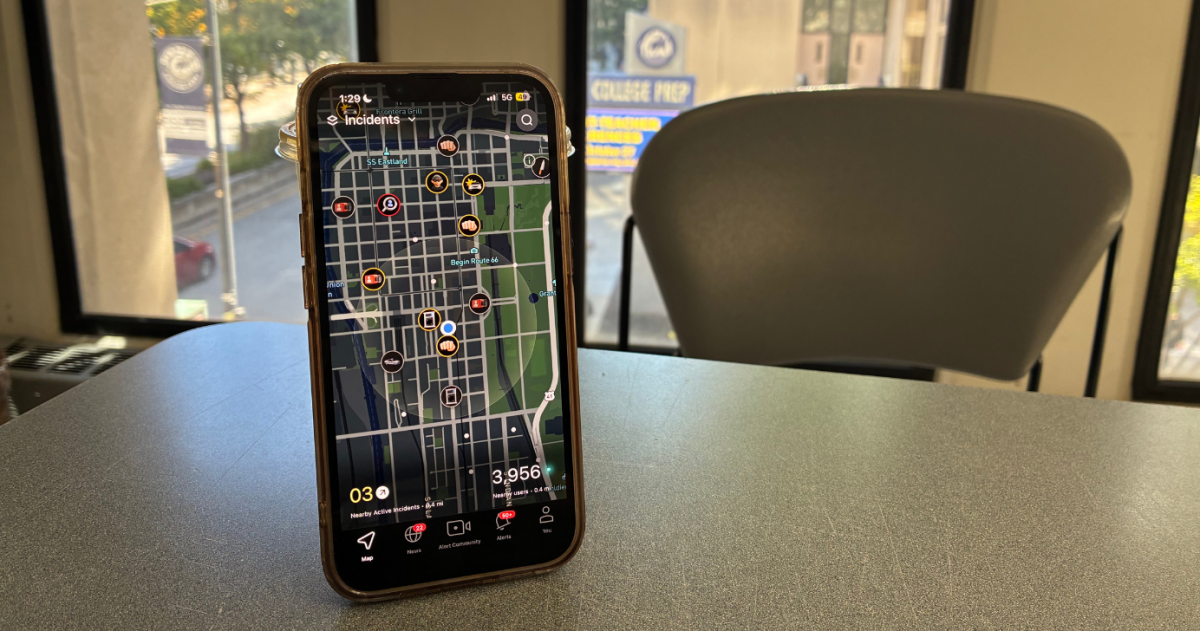
I spent a lot of time thinking about the deep reasons why she may be worried. Could it be the societal dissolution she’s had to witness as her children age and she retires? Some inner trauma she may have, carried on from her childhood, that I didn’t know about? Then I realized that it might not be so complicated. Could the app that literally alerts her the very second any crime in the general area occurs, possibly, just possibly be freaking her out?
It wasn’t long into the eighth grade that the Citizen Alert app infiltrated my mother’s phone. COVID-19 was top of mind, but I went back to school, and actually got a bit of a social life outside of class going. I’d hang out after class, head to Nichols Park, maybe stop at the gas station for snacks, or head over to a friend’s house if the weather wasn’t holding up. But Citizen had something to say about the safety of all of that.
Not too far removed from Citizen’s arrival, a tragic series of shootings took place on Lake Park Avenue, shadowed against the Kenwood Academic Center where I attended middle school. 15-year-old Kentrell McNeal was left dead, and a 14-year-old critically wounded, in what was the second murder of a Simeon Career Academy student that very day. The neighborhood was justifiably afraid. My school certainly was. And so was my mother. But Citizen was there to keep her company.
It became her clutch. She had notifications on for the app, both for Champaign, where my sister lived, and our Hyde Park home. She knew where murders took place. Where the gang violence was. She kept her children safe, just like any mother would. The areas I was banned from ended up experiencing crime again. I started checking the app too, because I knew it kept me safe, even if I was endlessly annoyed by her insistence on it.
The app stayed as I grew older. When I went to Jones, I was constantly aware of every fender bender and broken fire hydrant in the area. And so was my mother. I knew the app, as ridiculous as it could be, would keep me safe in this era of constant danger. This was just the way things were now.
Were they the way things are now?
I thought about the history of crime in Chicago. It’s not like this place was some clean fountain of safety and prosperity in the ’60s and ’70s. Or the ‘80s and ‘90s. And especially not the 2000s and 2010s, the former of which I was born into my Hyde Park home. So why did we suddenly feel like our statistically safe neighborhood was a hotbed of crime?
It’s not like the numbers had jumped. The City of Chicago actually recorded record drops in crime, most recently seeing a 33 percent reduction in violent crime. Yet my mother worried as if it plagued every corner.
Why had we been taught to fear our own neighborhood? I didn’t go to social events over the fear that some prospective crime could take place on some random street I’d have to walk on to get there, even if it had nothing to do with me. But at least the app told me that the crimes were happening.
But did it?
Citizen had a partnership with ShotSpotter to automatically detect and alert the user to gunshots in their area. But ShotSpotter famously got its own alerts wrong and mistook simple sounds like trash cans closing, cars backfiring, and balloons popping as gunfire. Hell, Citizen didn’t even get its locally sourced alerts correct. At our very own school last March, a rogue Citizen Alert told every student at this school that a gunman had been spotted inside the school, even though that wasn’t even close to the case! And then it happened again, just a few weeks ago, when Citizen blew the ramblings of an unhoused individual on State Street beyond out of proportion, reporting that threats of a mass shooting at the school had been made, prompting a response from school administrators and the Chicago Police Department.
The app that had invaded so much of our life didn’t even get the information it was invading it with correct. It taught us to fear our neighbors and our streets because of trash can lids closing and illegally parked cars.
And there’s a discriminatory element to it, as well. Overpolicing in majority-Black and Latino neighborhoods inevitably leads to overreporting of crime in the area. The south side of Chicago lights up red with gun emojis on the app, whereas the northside is littered with paw print emojis, indicating missing pets, and incidental car crashes. Violent crime on the North Side, although less pronounced, does still happen! Believe it or not, people don’t just get shot on the south side.
It’s time to do away with this app. We can’t fear our neighborhoods and our neighbors any longer. It teaches you to discriminate, to fear, and to isolate. We got on for years without Citizen Alert. We’ll survive again without it.

