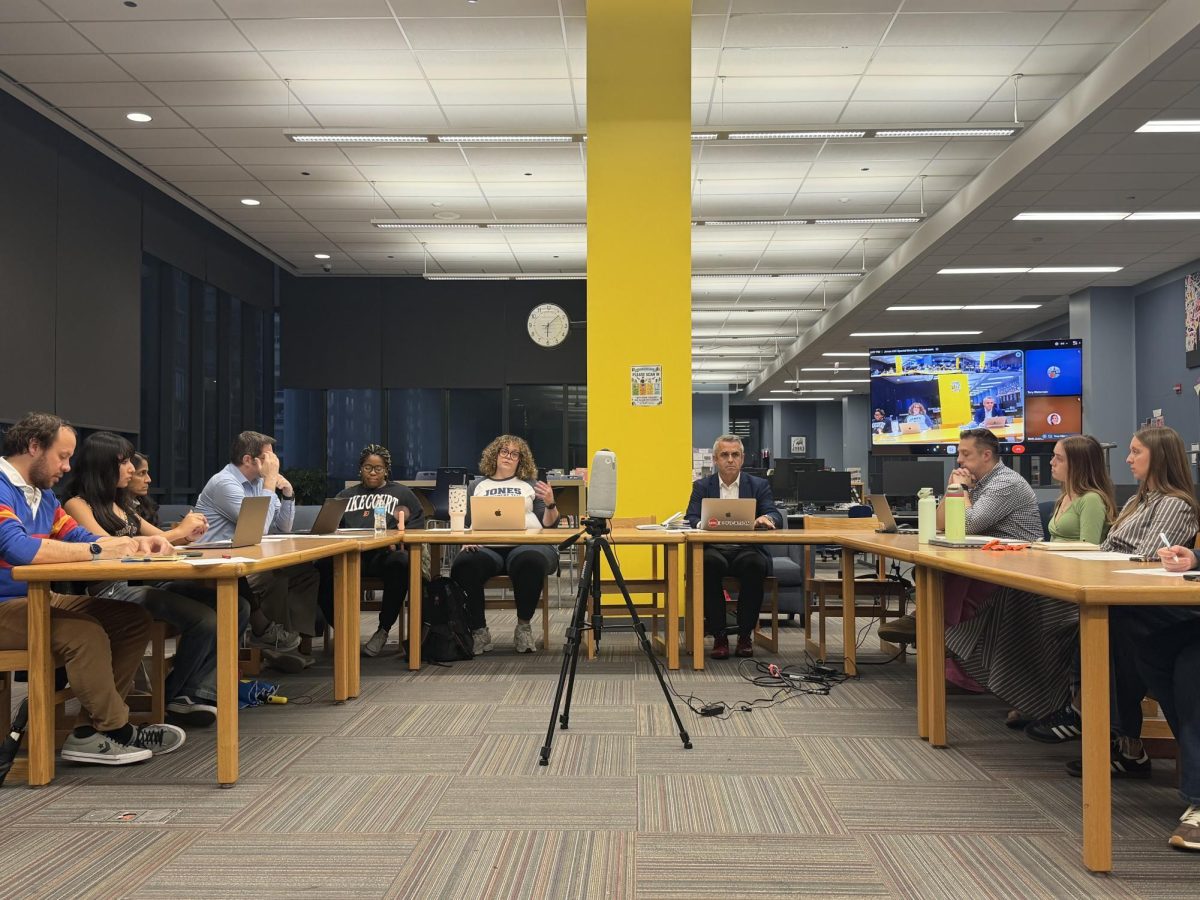
For students, teachers and parents, attendance at Jones College Prep is more than a daily roll call. This new edition to the attendance policy is a way for the school to identify changes early, connect students with the necessary support, and ensure that all will succeed academically. In an interview with Assistant Principal Ofori, Assistant Principal McGuire, and Assistant Principal Jordan, they discuss the way Jones implements these procedures to keep everyone on track.
“Our attendance policy is really focused on communication and transparency…It’s about partnering with students and parents and keeping everyone informed,” said Assistant Principal Ofori.
This shift reflects how the school views attendance, not just as a record but as a way to understand the needs of students.
“Teachers take attendance in Aspen every morning. Anyone who isn’t in front of them by the time the bell rings is marked tardy,” said AP Ofori.
To minimize mistakes in attendance, the school performs daily “double-checks”, where students are logged for attendance in the morning and afternoon classes.
“If a student is marked present in one class but absent in another, it’s possible that a teacher made an error. We check all attendance data and send daily reports to teachers so they can confirm or correct mistakes,” said AP Ofori.
Communicating from the school to the families is also a key part of the system.
“Parents receive a weekly attendance notification if their student has an unexcused cut, tardy, or absence. The email shows the student’s attendance summary and explains how to correct any errors,” said AP Ofori.
The school also takes into account legitimate absences, making sure no student is penalized for school events, appointments, or sports.“If a student had a school event, a sports game, or a doctor’s appointment, there’s a contact at the school who can ensure their attendance is updated correctly,” said AP Ofori.
Maintaining accurate records through a point system helps identify the students who may need additional help.
“The point of this system is to notice patterns. If there are multiple unexcused absences or tardies, we follow up with the right type of support for that student,” said Dr. McGuire.
Listening to students directly is also an important part of the process.
“Student voice is really important. We’re meeting with students who have faced the greatest attendance challenges to understand barriers and design the right supports,” said AP Ofori.
“We also send out a feedback form to parents and students. We review responses and implement changes based on that feedback,” said AP Ofori.
At the same time, families have the opportunity to provide concerns, so the school can make necessary adjustments. Keeping caretakers up to date involves more than just sending feedback forms, but also through multiple communication methods.
“Communication is key. Even if a parent doesn’t know how to use Aspen notifications, the emails provide another layer of support so families can help students correct attendance issues,” said AP Ofori.
By incorporating these strategies together, the school has strengthened its connection with families and has gained a better insight into the students’ needs.
“This policy is closing many communication gaps and helping us learn more about our students. Understanding why a student isn’t in class opens up conversations and resources we couldn’t offer before, and it’s helping us build stronger relationships with families,” said Dr. McGuire.
The system supports a large student body and allows our staff to be efficient, which directly improves communication with the families.
“With over 1,900 students, this system has really helped us understand who’s in class, who’s out for sports or appointments, and how to communicate that clearly. It’s allowed us to build relationships with families faster and close communication gaps,” said AP Jordan.
In the future, administrators hope to see a significant amount of growth in both attendance and student engagement.
“We want to see attendance rates improve, with fewer cuts and tardies. More importantly, for students who have been chronically missing class, we want to support them to attend more consistently and have deeper conversations about belonging,” said AP Ofori.